High Seas Horror Collection Review: A Literary Analysis of Myth, Madness, and Maritime Dread


Introduction: When the Sea Becomes Something More Than Water
Sea horror has always carried a unique psychological weight—unlike land-based fear, it removes control, certainty, and escape. High Seas Collection explores this unsettling frontier through a series of maritime horror stories that shift between folklore, cosmic dread, and psychological terror.
This anthology is uneven in execution, but at its best, it delivers deeply atmospheric storytelling that lingers like saltwater in memory. What makes the collection compelling is not consistency, but moments of brilliance where myth, isolation, and the oceanic unknown converge.
A quick descent into the sea’s darkest stories—press play, if you dare.
Cabin Nine: A Slow Burn Opening into Maritime Unease
The collection opens with Cabin Nine, a story that immediately establishes tone and expectation. It builds slowly, almost patiently, creating an atmosphere of creeping dread rather than immediate horror.
The influence of classic gothic literature is evident, particularly reminiscent of Dracula—especially the Demeter sequence, where isolation at sea becomes a vessel of inevitable doom. The horror here is not overt; it is structural. The ship itself becomes a liminal space where reality begins to destabilize.
This opening story succeeds because it understands restraint. It does not rush the horror—it lets it accumulate.
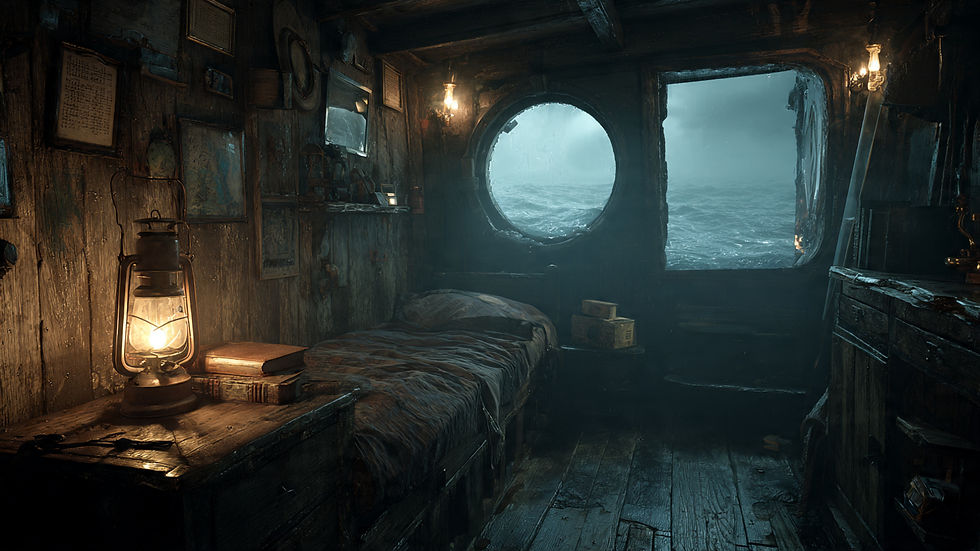
Sea Monsters and Narrative Disruption: The Problem of Over-Explanation
The second story begins with strong potential: an eerie maritime legend involving a grandfather, a sailor’s past, and inherited sea trauma. The setup suggests psychological horror rooted in generational myth.
However, the introduction of a literal sea monster weakens the atmospheric tension. What initially feels like folklore-inspired ambiguity becomes more predictable creature horror. The shift reduces interpretive depth.
A more compelling approach would have been to explore the sailors’ transformation more gradually, grounding it in mythic ambiguity rather than explicit explanation. In maritime horror, mystery is often more powerful than revelation.

Pelagus Green: Color Symbolism and Oceanic Memory
Pelagus Green stands out as one of the most visually and thematically rich entries in the collection. The use of color as symbolic language—especially the grey-green ocean tone—creates a sensory anchor that enhances immersion.
The story succeeds in blending revenge narrative with environmental atmosphere. The sea is not just setting here; it becomes emotional memory. The shifting oceanic moods reflect internal transformation, making the narrative feel both mythic and intimate.
Baited Breath: Sirens, Fate, and Predictable Tragedy
Set on a remote Greek island, Baited Breath revisits the siren myth. While the ending is somewhat predictable, the narrative earns its conclusion through pacing and atmospheric consistency.
Rather than subverting myth, the story reinforces it. This choice may not surprise, but it stabilizes tone. The inevitability of fate becomes part of the horror.

A Drop of Nelson’s Blood: Ambiguity as Horror Architecture
This is one of the strongest entries in the collection.
A lone woman surrounded by predatory sea leeches creates immediate tension, but the real strength lies in ambiguity. The creatures’ fascination with beads introduces unanswered questions:
Are they distracted by ritual significance?
Are they vampiric entities?
Or something entirely unknown?
This refusal to explain strengthens the horror. In maritime fiction, ambiguity often functions as the deepest form of dread. The story understands that fear thrives in incompleteness.
A brief backstory could have enriched the mythology, but the lack of explanation also preserves its unsettling power.
Floaters’ Ozymandias: Surreal Ecology and Underwater Myth
This story takes a more experimental turn. Dead sailors and pirates becoming part of an underwater ecosystem creates a surreal, almost ecological horror framework.
The concept of a “sustainable death ecosystem” is particularly striking. It transforms maritime horror into something philosophical—suggesting that even death is absorbed and repurposed by the sea.
The aquatic garden imagery is especially memorable, while the sea serpent encounter introduces a darker, slightly comic horror tone.

Hodge & The Deep-Sea Horrors: Overcrowded Lovecraftian Influence
This story attempts Lovecraftian horror but struggles with tonal overload. The presence of too many sea creatures dilutes narrative focus and weakens atmospheric tension.
However, the entity Suiko stands out as genuinely unsettling. It evokes folkloric dread and suggests a deeper mythological system that could have been explored further.
The issue here is not imagination—it is density. Too many ideas compete for attention.
Something Behind the Teeth: Lovecraftian Excellence
This is one of the most successful Lovecraftian stories in the collection.
A remote island, a church setting, whispered fears, and an unseen entity combine to create slow, suffocating dread. The influence of The Shadow over Innsmouth and Dagon is clear, but the execution feels fresh.
What makes it effective is pacing: horror is not shown but inferred. The sense of something “behind” perception itself is what creates fear.

The Isle of Khaolos: A Strong Mythic Closure
The final story successfully returns to classic cursed-island mythology. It evokes doom, inevitability, and ancient maritime superstition.
Lost sailors, malevolent forces, and environmental hostility combine to create a strong closing atmosphere. It feels like a return to foundational sea horror archetypes.
Overall Analysis: Strengths, Weaknesses, and Thematic Identity
High Seas Collection is defined by inconsistency, but also by flashes of strong atmospheric storytelling.
Strengths
Strong maritime atmosphere and sensory imagery
Effective use of ambiguity in key stories
Memorable mythic and Lovecraftian influences
Occasional philosophical depth (especially in ecological horror themes)
Weaknesses
Over-reliance on familiar horror tropes in some stories
Inconsistent pacing and tonal overload
Occasional over-explanation reduces narrative tension
Uneven balance between psychological and creature horror

Final Verdict
Despite its uneven execution, the collection succeeds where it matters most: atmosphere, imagery, and lingering unease.
The strongest stories—particularly A Drop of Nelson’s Blood, Something Behind the Teeth, and Floaters’ Ozymandias—leave a lasting psychological imprint.
The sea, in this collection, is never just setting. It is memory, myth, predator, and grave.
Postscript
Nelson’s Blood and the underwater garden imagery from Floaters’ Ozymandias remain the most enduring elements—concepts that continue to surface long after the final page.
I’ve intentionally avoided overly centering the individual story names in this review so as not to dilute the reading experience or reveal too much of the anthology’s structure. The intention is to let the themes, atmosphere, and interpretations guide your curiosity rather than the plot points themselves.
If this analysis resonated with you, you can find my full reader reviews and ratings here: Goodreads: https://www.goodreads.com/review/show/8473351053



Comments